Image


Professor Frank Behrens is Professor of Translational Rheumatology, Immunology and Inflammation Medicine and Head of the Inflammation Clinic, University Hospital, Frankfurt am Main, Germany, and Deputy Director, Fraunhofer Institute for Translational Medicine & Pharmacology (ITMP), Goethe University, Frankfurt am Main. He is also a member of the board of directors of the Fraunhofer Cluster of Excellence for Immune-Mediated Disease (CIMD).
Professor Behrens studied biology at the Johannes Gutenberg University in Mainz, Germany, before going on to study human medicine. He completed his doctorate in haematology and oncology before training in internal medicine and rheumatology.
Professor Behrens' main research interest is the pathophysiological understanding of spondyloarthritis, rheumatoid arthritis and mixed connected tissue disease. The focus is on understanding the links between these rheumatic conditions and associated skin and bowel diseases. The aim of the work is to develop new drug therapies and implement personalised treatment approaches using combined biomarker analyses and new imaging techniques. Since 2001, he has gained experience in clinical research and development as Principal Investigator, Chief Investigator and Managing Investigator. He is responsible for several investigator-initiated studies in rheumatic diseases.
Professor Behrens has published numerous articles in peer-reviewed journals and is author of several textbooks in the field of rheumatic diseases.
Professor Behrens is a member of various international committees and study groups such as the Group for Research and Assessment of Psoriasis and Psoriatic Arthritis (GRAPPA), the Expert Panel Measures in Pulmonary Arterial Hypertension Related to Outcome of Systemic Sclerosis (EPOSS) and the Psoriatic Arthritis Genetic European Consortium (PAGE).
As HS is unique to every patient, their conversation should be too. Prompt your patients to download/print out this guide to take to future appointments
Updated to reflect major changes in the European S2k guidelines, this guide empowers to understand HS and navigate their care
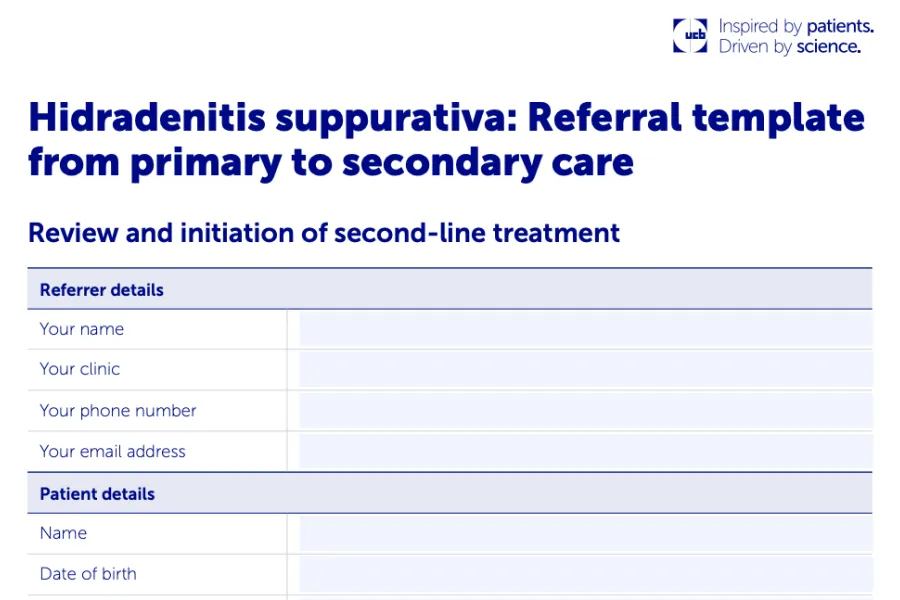
Intended for general practitioners who are referring patients with HS to dermatologists when mild-to-moderate HS has not responded to first-line treatment
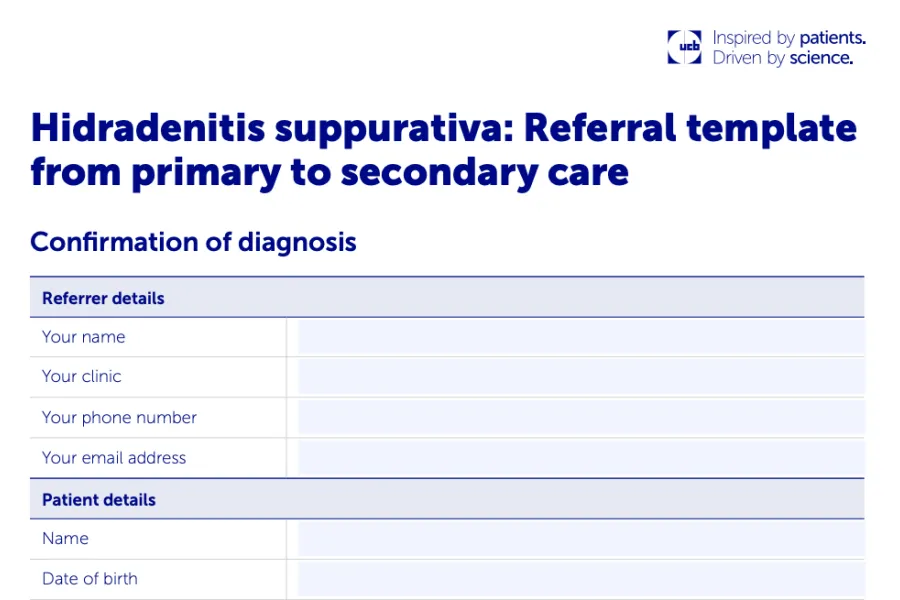
This template is intended for general practitioners looking to refer patients with suspected or severe HS to dermatologists in secondary care
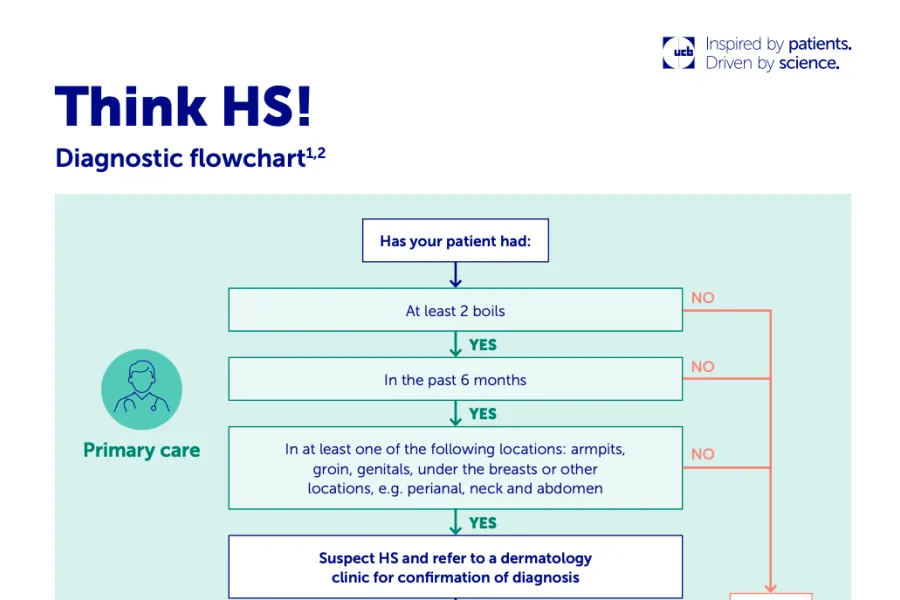
Can you spot the signs and symptoms of HS? Take a look at our algorithm that aims to aid a diagnosis of HS
Updated to reflect major changes in the European S2k guidelines, this guide can help you to successfully recognise, manage and communicate with patients