Image

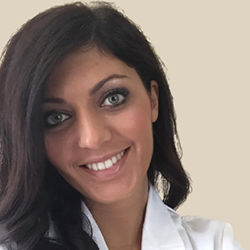
Dr Annunziata (Nancy) Dattola is Researcher at the Department of Dermatology, University of La Sapienza in Rome, Italy.
Her main field of interest is the diagnosis and treatment of inflammatory skin diseases. In 2013, Dr Dattola completed a 2-year fellowship at the Laboratory for Investigative Dermatology at the Rockefeller University, New York, NY. During her fellowship, she focused on psoriasis, metabolic syndrome and imaging such as positron emission tomography (PET)/computerised tomography (CT), sono-elastography, and CT angiography, in the diagnosis of patients with psoriasis. In January 2021, she completed her PhD in Biochemistry and Molecular Biology with a thesis entitled: “Results of two different biological treatments in patients with PsO and PsA, and detection of early arthritis”.
Dr Dattola’s current research includes projects on biological agents for the treatment of psoriasis, laser and cosmetology. She is also involved in numerous phase III clinical trials and is author of many papers on these topics. She completed 3 years of research at the University of Rome Tor Vergata from 2018 to 2021.
Dr Dattola is a member of the “Italian task force” for women with psoriasis, member of the Italian Society of Dermatology and Venereology (SIDeMaST), member of the European Academy of Dermatology and Venereology (EADV) and member of the local organising committee for the World Congress of Dermatology 2019 Milan, Italy.
As HS is unique to every patient, their conversation should be too. Prompt your patients to download/print out this guide to take to future appointments
Updated to reflect major changes in the European S2k guidelines, this guide empowers to understand HS and navigate their care
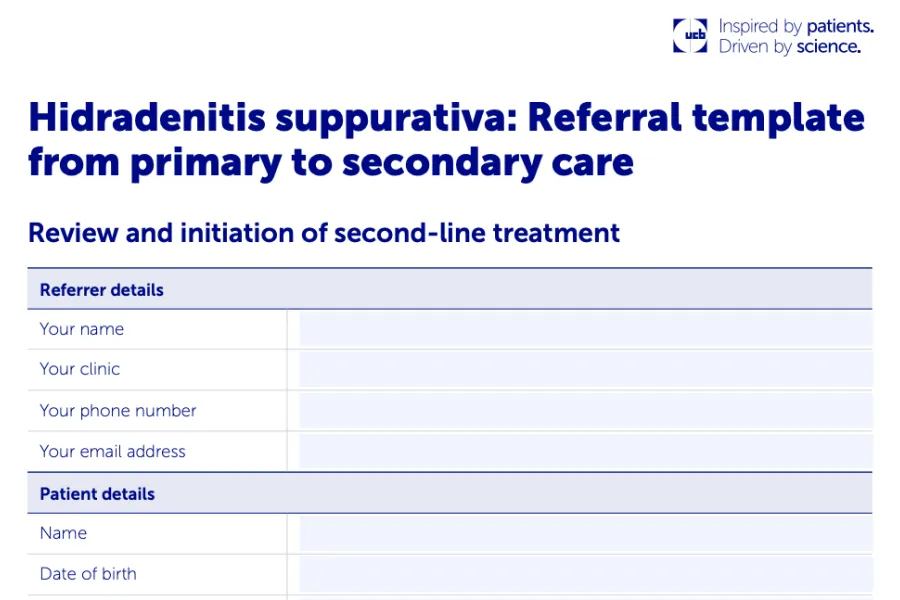
Intended for general practitioners who are referring patients with HS to dermatologists when mild-to-moderate HS has not responded to first-line treatment
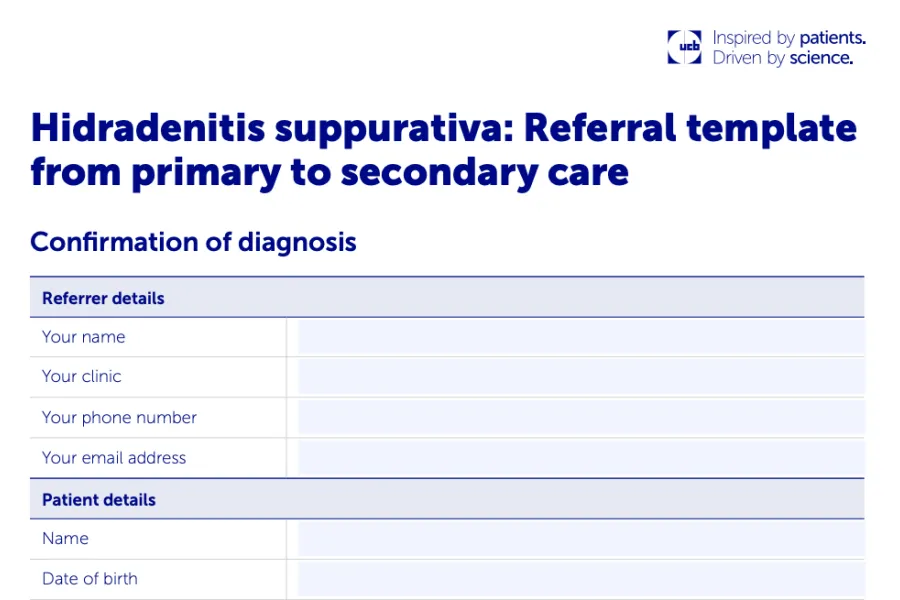
This template is intended for general practitioners looking to refer patients with suspected or severe HS to dermatologists in secondary care
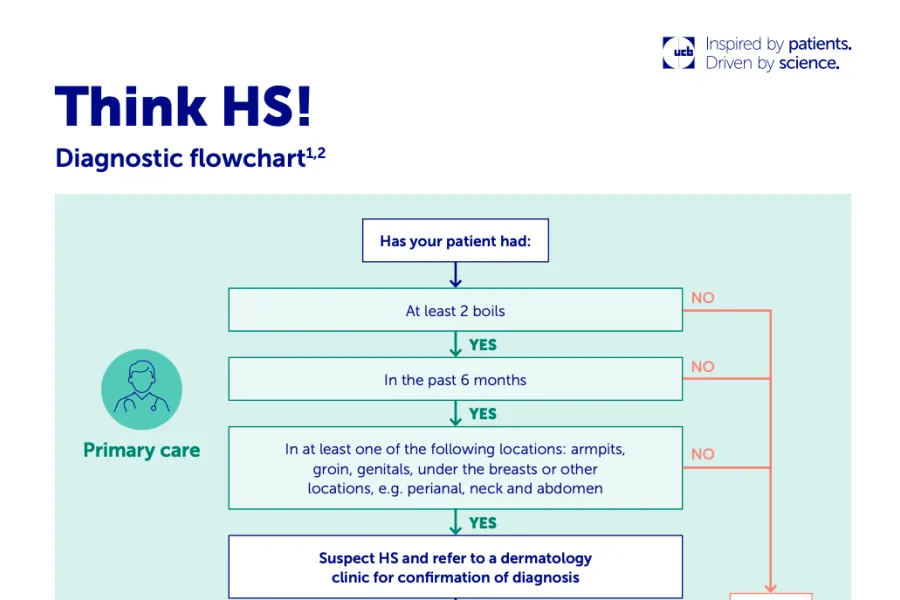
Can you spot the signs and symptoms of HS? Take a look at our algorithm that aims to aid a diagnosis of HS
Updated to reflect major changes in the European S2k guidelines, this guide can help you to successfully recognise, manage and communicate with patients